
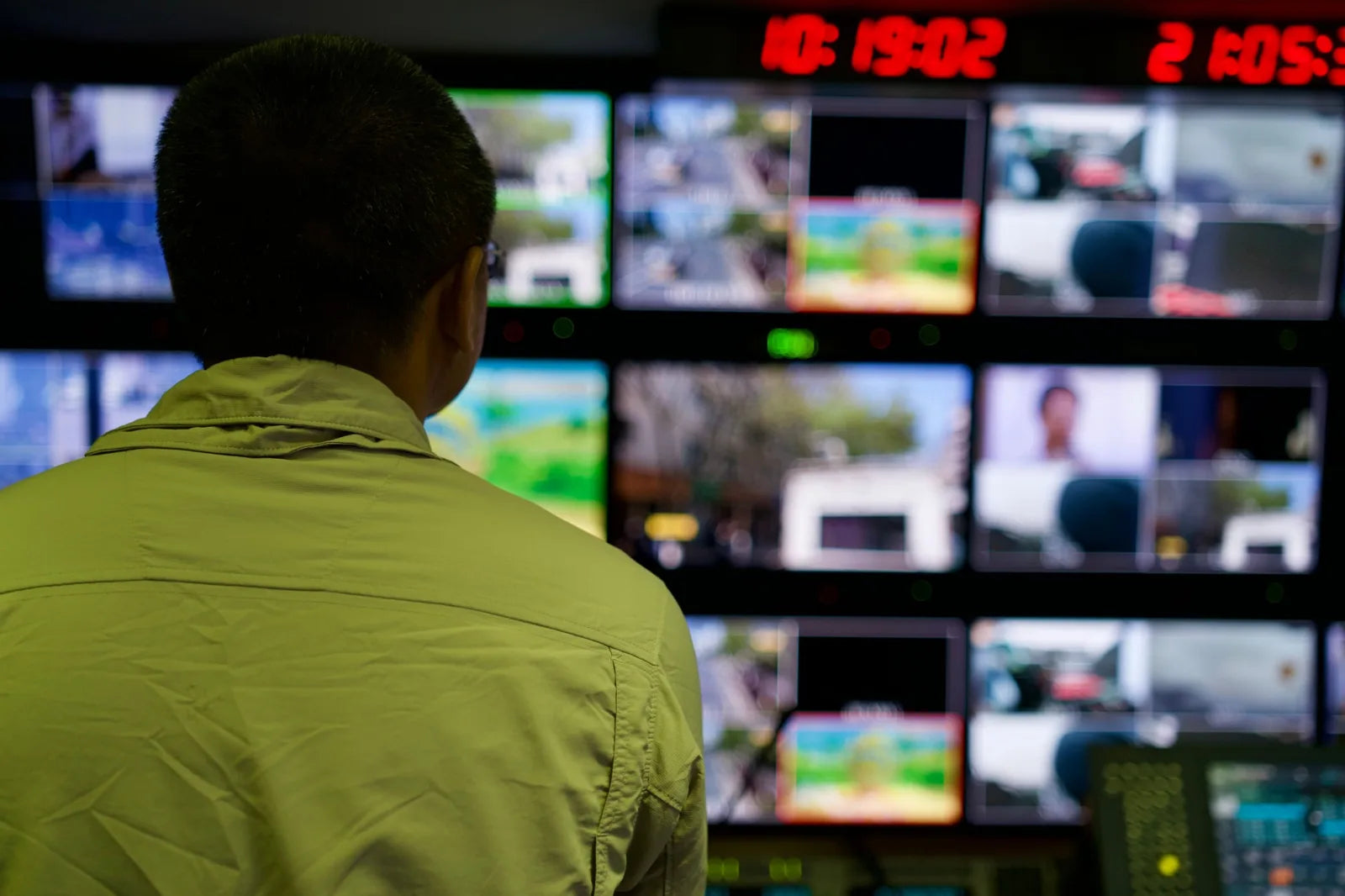
CCTV Operator training is the licence-linked route for people who want to work in Public Space Surveillance roles covered by SIA licensing. CCTV work is a distinct career path from Door Supervisor and Security Guard work, and is typically based in control rooms, monitoring environments and surveillance operations.
What does a CCTV operator do?
CCTV operators monitor camera systems, identify incidents, communicate with colleagues or external agencies, preserve relevant information and follow legal and organisational procedures. The role can involve long periods of concentration followed by rapid decision-making when an incident occurs.
Where do CCTV operators work?
- Public-space CCTV control rooms
- Shopping centres and retail environments
- Transport hubs
- Corporate and security operations centres
- Local-authority or contractor-operated surveillance environments
- Large venues and event-related monitoring operations
How long is CCTV training?
Current SIA guidance lists Public Space Surveillance (CCTV) training at 22 hours over 3 days with permitted self-study, or 30 hours over 4 days without self-study.
What does the course cover?
- Working in the private security industry
- CCTV operator roles and responsibilities
- Operating surveillance systems
- Control-room procedures
- Communication and incident response
- Legal and professional responsibilities
- Evidence and information handling
- Practical CCTV operation
Practical CCTV assessment
Expect practical assessment of CCTV-related skills as well as knowledge assessment. The exact assessment format depends on the recognised qualification and awarding organisation.
Can CCTV training be completed online?
Do not assume the course can be completed entirely online. While permitted self-study can reduce classroom time, licence-linked training contains required assessment and practical delivery. Each provider listing makes the delivery format explicit.
Do I need first aid?
The standard Door Supervisor and Security Guard first-aid prerequisite does not apply to CCTV in the same way. Always check the exact provider and qualification requirements shown on the event.
CCTV vs Door Supervisor
| Feature | CCTV | Door Supervisor |
|---|---|---|
| Main environment | Control room and surveillance | Front line: venues, events, guarding |
| Licence category | Public Space Surveillance | Door Supervision |
| Current duration with self-study | 22 hrs over 3 days | 44 hrs over 6 days |
| First-aid prerequisite | Not the same standard prerequisite | Yes |
| Practical focus | CCTV operation | Physical intervention and front-line skills |
Can I hold CCTV and Door Supervisor licences?
Yes. Some security workers hold multiple licence categories to widen the roles they can perform. The training and licence requirements for each category still need to be met, and from 1 June 2026 additional eligible licences in the same application cost £102 each. Licence costs explained
How do I get my first CCTV job?
- Complete the recognised CCTV qualification.
- Apply for the appropriate SIA licence.
- Build a CV around observation, communication and incident-handling skills.
- Look at control-room, retail, transport and operations-centre vacancies.
- If you already work in security, ask whether your employer has internal control-room opportunities.
Is control-room work right for you?
CCTV work suits people who can concentrate for long stretches, write clearly and stay calm when something happens quickly. It is largely indoors and desk-based, often on shift patterns that include nights and weekends. If you want to be on your feet and dealing with people face to face, the Door Supervisor route fits better; plenty of people eventually hold both.
Data protection and evidence handling
Surveillance work carries legal responsibilities that go beyond watching screens. Operators handle personal data, and footage can become evidence, so procedures for recording, retention, access and disclosure matter. The qualification covers the legal and professional side alongside the practical skills, and employers will expect you to follow their documented procedures from day one.
CCTV vs Security Guard
These are different categories for different work. A Security Guard licence covers guarding activity at premises; a CCTV licence covers relevant public-space surveillance. Neither one covers door supervision at licensed premises. Choose by the vacancy you want, and remember you can add categories later.
What employers look for
- Sustained concentration across a long shift, and accurate written records
- Clear, calm radio and telephone communication under pressure
- Understanding of data protection, retention and evidence handling
- Reliability on a rota that includes nights, weekends and holidays
- Judgement about when to escalate and to whom
Previous experience in dispatch, customer service or any role requiring careful record-keeping reads well on a CV, even if it is not security work.
How to choose a course
Comparing listings is easier when you know what actually differs between them:
- That the centre is approved. Licence-linked training must be delivered by a centre approved by an awarding organisation.
- Which qualification and awarding organisation. Ask if a listing does not say.
- The real timetable. Daily start and finish times, and whether it runs on consecutive days, weekends or a mix.
- First-aid position. Included, available as an add-on, or must already be held.
- Total cost. Course fee, first aid if needed, travel, and the separate SIA application fee.
- Resit policy and results timescale. Both matter if you are working to a deadline.
- Cancellation terms. Yours and the provider's.
Treat guaranteed-pass promises, vagueness about the awarding organisation, and prices far below the market as reasons to look elsewhere.
Shift work, realistically
Control rooms run around the clock, so expect rotating shifts. The work is mostly quiet punctuated by short periods of intensity, which suits some people and not others. Ask about shift length, breaks, how many operators cover a shift and what happens during an incident before accepting a role.
What happens after the course?
After passing the recognised qualification, you apply separately for the SIA Public Space Surveillance (CCTV) licence. The SIA's licensing checks still apply. CCTV operator career guide
Last reviewed 22 September 2026. SIA rules and fees change. Check the current official guidance before you book or apply: SIA licence-linked training durations · Changes to the delivery of SIA licence-linked training · April 2026 change to the SIA licence fee

