
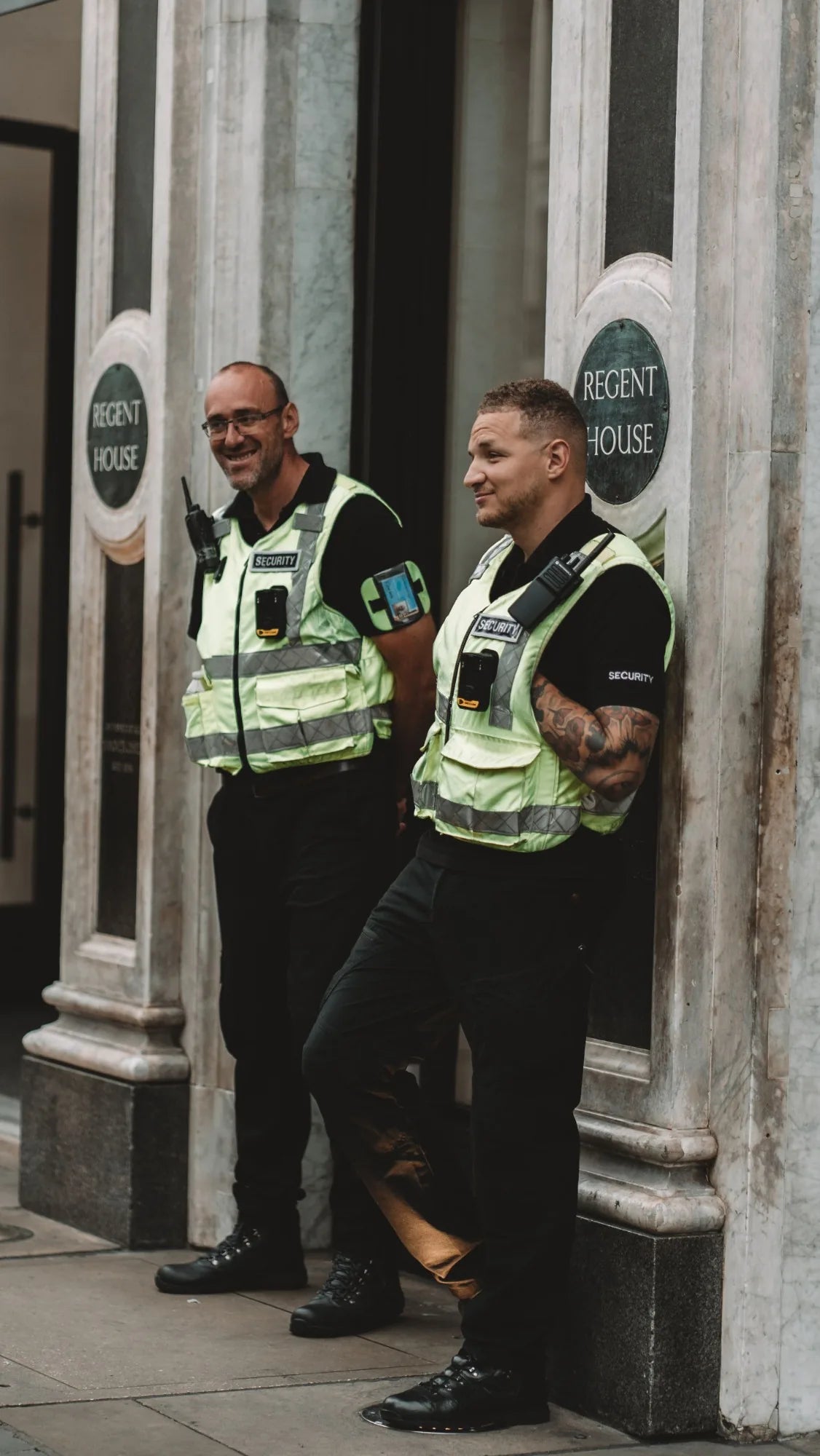
The Security Guard qualification is the licence-linked route for front-line guarding roles where Door Supervisor activity is not required. It can suit people targeting retail, offices, warehouses, construction sites and other static or guarding environments, depending on the actual duties.
The most important question: Security Guard or Door Supervisor?
Before booking Security Guard training, compare it carefully with the Door Supervisor route. Door Supervisor training is longer but generally offers broader front-line flexibility, because it covers door-supervision activity at licensed premises and includes additional practical content.
Security Guard training is appropriate where you genuinely want a guarding role that does not need Door Supervisor scope. It should not be chosen simply because it is shorter or cheaper.
| Feature | Door Supervisor | Security Guard |
|---|---|---|
| Licensed-premises door supervision | Designed for this route | Does not cover Door Supervisor activity |
| Physical intervention practical training | Included | Different, narrower route |
| Current training length | 44 hrs over 6 days with self-study | 30 hrs over 4 days with self-study |
| First-aid prerequisite | Yes | Yes |
| Typical flexibility | Broader common front-line route | More specific guarding route |
Not sure? Compare both routes before booking.
How long is Security Guard training?
Current SIA guidance lists Security Guarding at 30 hours over 4 days with permitted self-study, or 38 hours over 5 days without self-study.
First aid requirement
You must hold the required valid first-aid qualification before Security Guard licence-linked training begins. Combined first-aid and Security Guard options are shown where providers offer them. First aid for SIA training
What does Security Guard training cover?
- Working in the private security industry
- Security-guard roles and responsibilities
- Searching
- Keeping people in vulnerable situations safe
- Terror-threat awareness
- Conflict management
- Communication and incident response
- Personal safety and professional conduct
Typical jobs
- Retail security
- Office and corporate guarding
- Warehouse and logistics security
- Construction-site security
- Static guarding
- Gatehouse and access-control work where the role falls within Security Guard licensing
What the job actually involves
Security guarding is mostly routine done well: patrolling, controlling access, checking deliveries, monitoring alarms, recording what happened and escalating when something is wrong. Accurate logs and reliable timekeeping matter more than confrontation, and much of the value is in noticing the thing that is out of place. Some sites are busy and people-facing; others are quiet and solitary for long periods.
Shift patterns and conditions
Expect day, night and rotating shifts, often 10 to 12 hours. Retail and reception roles tend to be busier and more customer-facing, while construction and logistics sites can be isolated. Before accepting a role, ask about shift length, breaks, lone working and what welfare arrangements the site has.
Can I upgrade to Door Supervisor later?
Yes. You can complete the Door Supervisor qualification later and apply for that category, subject to current rules. It does mean paying for a second, longer course and a further application, so if there is a realistic chance you will want venue or event work, it is usually cheaper to start with Door Supervisor.
What employers look for
- Reliable timekeeping and attendance, which matters more than anything else on a rota
- Clear incident reports and accurate logs
- A calm, customer-facing manner on sites where the public are present
- Awareness of searching, vulnerability and terror-threat procedures
- Willingness to cover nights and weekends when starting out
Where the work is
Demand is steady across retail, logistics, construction, corporate offices and public buildings, and much of it is filled through security contractors and facilities companies rather than advertised directly by the site. Registering with several contractors in your area, and being flexible about shifts at first, is usually the fastest route to regular work. How to become a security guard
Where it can lead
Guarding is a common entry point rather than a ceiling. Site supervisor and team-leader roles follow experience; adding a CCTV licence opens control-room work; and specialist environments such as healthcare, corporate or higher-education security tend to pay above basic static guarding.
How to choose a course
Comparing listings is easier when you know what actually differs between them:
- That the centre is approved. Licence-linked training must be delivered by a centre approved by an awarding organisation.
- Which qualification and awarding organisation. Ask if a listing does not say.
- The real timetable. Daily start and finish times, and whether it runs on consecutive days, weekends or a mix.
- First-aid position. Included, available as an add-on, or must already be held.
- Total cost. Course fee, first aid if needed, travel, and the separate SIA application fee.
- Resit policy and results timescale. Both matter if you are working to a deadline.
- Cancellation terms. Yours and the provider's.
Treat guaranteed-pass promises, vagueness about the awarding organisation, and prices far below the market as reasons to look elsewhere.
What to bring
- Photo ID and any documents listed in your joining instructions
- Your first-aid certificate, unless first aid is included with your booking
- Comfortable clothing suitable for practical sessions
- Something to write with: there are knowledge assessments
What happens after passing?
Once the recognised qualification has been achieved, you apply separately for the SIA Security Guard licence and must meet the SIA's other criteria. The application fee is currently £204, separate from your course fee.
Last reviewed 22 September 2026. SIA rules and fees change. Check the current official guidance before you book or apply: SIA licence-linked training durations · Changes to the delivery of SIA licence-linked training · April 2026 change to the SIA licence fee

